Beginners · 28 October 2026 · 4 min read
What does RC mean on football cards?
RC stands for rookie card. Here's what the logo tells you, why football rookie cards are harder to define than you'd think, and how to check one before buying.
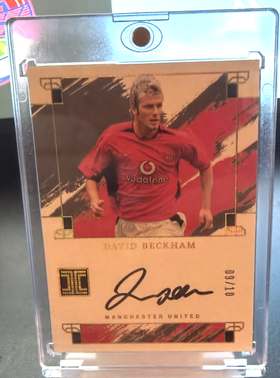
Scroll through any football card listing and you'll see RC tacked onto plenty of titles. It stands for rookie card, and it's one of the most searched terms in the hobby for a good reason: rookie cards are usually the cards collectors chase most for a player. But the two letters don't always mean as much as a seller hopes. This guide covers what RC means, where the logo comes from, why football makes it a bit messier than American sports, and what to check before you pay extra for one.
RC means rookie card
A rookie card is a player's first card after they've made their senior debut. Topps describes rookie cards as usually carrying a designation such as "RC" on the front or back, appearing in the year of the debut or sometimes the following year. In modern football sets that usually means a small RC logo printed on the card itself. When Topps announced its Premier League 2025/26 set, it described rookie cards as a player's first trading card, marked with a special RC logo, and called them some of the most sought-after cards in the product.
Why collectors care about rookie cards
A rookie card marks the start of a player's story on cardboard. If that player goes on to win titles or become a club legend, their rookie cards are the ones people go looking for, because there's only ever one first season. That's why a rookie can sell for more than a card of the same player from later in their career. It's not a rule, though. Plenty of rookie cards never rise above base-card prices, because most players don't become stars. The logo tells you a card's place in a player's timeline, not what it'll be worth in five years.
Why football rookie cards get complicated
In baseball or basketball there's a fairly settled idea of which sets produce a true rookie card. Football is messier. Players debut at different ages in different leagues, cards come under different licences (Topps holds the UEFA club competitions licence, while Panini has had others), and a player can appear in a Champions League set, a league set and a World Cup set in the same season. Marketplace COMC admits the hobby has no foolproof system and publishes its own rules: the card should show the player in a pro kit, be fully licensed, come from a nationally distributed base set, and be released after the player's top-level debut. Other collectors draw the line differently, so it's worth knowing that not everyone will agree on every card.
RC logo vs rookie year vs "rookie" in the title
These get mixed up all the time. A card with a printed RC logo is the manufacturer saying it's a rookie card. A rookie year card is any other card of the player from that same first season, such as an insert or a set without the logo. And a listing that just says "rookie" in the title is a seller's description, which may or may not match either. Before paying a rookie premium, look at the photos and check whether the RC logo is actually on the card. If it isn't, ask the seller why they're calling it a rookie.
What about older cards and stickers?
The RC logo is a modern habit. Older football cards and stickers from the Merlin and Panini sticker era usually don't carry one, so collectors work out a player's first appearance from checklists instead. Our Michael Owen Merlin Premier League 98 sticker guide is a good example: it explains why a sticker isn't quite the same thing as a card, and why you should be careful with the word rookie when there's no logo to settle it.
Rookie parallels and autographs
Many modern sets print the same rookie card in colour parallels, often serial numbered, such as /99 or /25. Each one is still a rookie card, but they're separate versions, so don't compare the price of a numbered parallel with the plain base rookie. A rookie autograph, signed on the card or on a sticker, is usually the top chase for a new player. The Topps UK hobby glossary is a handy reference if parallels, inserts and relics are new to you.
A quick checklist before buying an RC
Confirm the player, year, set and card number. Check the RC logo is printed on the card, not just in the title. Work out whether it's the base rookie or a parallel, and read the serial number if there is one. Look at both sides for corner, edge and surface damage. Compare prices with sold listings of the same version and condition, not asking prices. Once it's yours, sleeve it and put it in a toploader; our card protection guide runs through the basics.
Chasing rookies live
Part of the fun of opening packs is not knowing which young player will turn up. If you'd like to watch that happen, see how Craig's repacks work or catch the next Whatnot stream. New to repacks? Start with what a football card repack actually is. Every pack is opened on camera, and you'll always know exactly what came out.
Sources and further reading
- Topps Ripped: Rookie Card definition ↗
- Premier League: Topps Premier League 2025/26 announcement ↗
- COMC: Pre-Rookie, Rookie Card, Rookie Year and Rookie Related ↗
- Topps UK hobby glossary (PDF) ↗
Product references checked on 28 October 2026. This guide is published by a football-card repack seller; it is not a manufacturer checklist or investment advice.
More collecting guides

Player guides · 28 October 2026
Michael Owen Merlin 98 #333: buying guide
Identify Michael Owen’s 1997/98 Merlin Premier League 98 sticker #333, check its condition and compare listings without confusing years or rookie claims.
Beginners · 20 October 2026
What is a football card repack, and is it worth it?
Repacks get a bad name. Here's how a proper one is built, and why opening it live changes everything.
Collecting · 6 October 2026
Sleeve, toploader, done: protecting your hits
The two-minute routine that keeps a card mint from the wrapper to the binder.
New to Whatnot?
Claim your free credit.
Sign up through the link and Whatnot drops credit on your account for your first show.