Collecting · 3 November 2026 · 5 min read
PSA 9 vs PSA 10 football cards
Understand PSA Mint 9 and Gem Mint 10 football cards, compare condition and sold prices, and decide whether a higher grade fits your collection.

A PSA 9 and a PSA 10 can look very similar in a listing photograph. Both may look clean, centred and ready for a display. The grade difference is real, but its importance depends on the exact card, the price difference and what you want from your collection. There is no rule that every football card is only worth owning as a 10. Equally, a 9 is not a promised future 10. Start with the grading company's standards, then compare the actual cards and recorded sales rather than buying the number alone.
What PSA 9 and PSA 10 mean
PSA calls grade 9 Mint and grade 10 Gem Mint. Its Gem Mint description refers to a virtually perfect card, with attributes including sharp corners, sharp focus and original gloss. The official standard also allows a slight printing imperfection where it does not impair overall appeal. That matters because ‘Gem Mint’ is not a claim of absolute microscopic perfection. Read the current PSA grading standards for the full criteria rather than treating an online shorthand as the complete definition. These names belong to PSA's scale; another company's similar-looking number is not automatically identical.
Condition is more than the corners
PSA's explanation of fresh-pull grading discusses manufacturing, centring, corners, edges, surface issues and print defects. A card can be protected immediately after opening and still have characteristics that affect its grade. A clean front photograph may not reveal every surface issue or show the reverse clearly. Ask for sharp images of both sides and inspect the actual card rather than assuming that a neat holder label tells you everything visible about it. If you are shopping in person, take your time and avoid handling that risks damaging an unprotected card.
Pack-fresh is not a guaranteed 10
PSA explicitly warns that freshly pulled cards do not automatically merit a 10, or even a 9. Manufacturing defects and centring can be present before a collector touches the card. Sleeving quickly helps prevent additional damage; it does not correct printing or cutting. A seller saying ‘straight from the pack’ is describing handling history, not supplying a condition grade. Our card protection guide covers care after an opening, while the grading decision remains the grader's assessment. Do not build a purchasing budget around an assumed 10 result.
There is no fixed PSA 10 price multiplier
The gap between a 9 and a 10 has to be researched for the exact card. Do not apply a percentage from another player, sport or set. Match the year, checklist number, parallel and autograph or relic details, then look for recorded sales in each grade. If you cannot find useful results, the price difference is uncertain. Our football-card sold-price guide explains accepted offers, dates and like-for-like comparisons. A high asking price for a 10 does not prove someone paid it, and one exceptional sale is not a universal price rule.
When a PSA 9 may fit the collection
If your goal is to own a particular card and you like the appearance of an available 9, compare its delivered cost with the alternatives. It may leave more room for other cards you want, but do not assume every 9 is cheaper than every 10 in unrelated listings. Condition differences, seller terms and timing can complicate the comparison. A collection can have a mixture of raw cards and grades without being incomplete. Our budget collecting guide starts with personal priorities rather than a compulsory grade target.
When you may prefer a PSA 10
You may deliberately collect the highest grade available for a specific modern card, or prefer a particular 10's appearance. That is a collecting choice. Decide how much the preference is worth to you and check comparable sales before paying a premium. Do not turn the choice into a prediction that the card will rise in value. Nor should you assume a 10 has stronger evidence for the match origin of a relic. The condition grade and the manufacturer's memorabilia wording answer different questions; our relic wording guide explains the distinction.
Check the certificate and the physical item
Use PSA's official certification lookup and compare the returned details and available images with the card being offered. PSA warns that genuine certification numbers can be copied onto counterfeit labels, so a database match is not conclusive by itself. Inspect the holder, label and card together, and ask questions if they disagree. A blurry photograph or refusal to show the reverse is a reason to pause. Keep payments and messages within the platform's protection arrangements where applicable, and do not assume every listing is authenticated merely because it is graded.
Think carefully before resubmitting a 9
Resubmission adds cost and does not guarantee an upgrade. Breaking a card out of a holder also introduces handling risk. If you are considering any grading or review service, check the grader's current process, fees, shipping and terms first. The card you already own may suit your collection perfectly. Do not treat the highest comparable sale of a 10 as money you will certainly receive after resubmission. A condition prediction, especially from a photograph, is not the same thing as a completed grading result.
The useful question is whether it suits you
Check the exact card, its appearance, the certificate, comparable sales and your total budget. Then decide whether the difference matters to your collection. You can watch football-card openings with Craig for enjoyment without expecting every pull to grade 10. If you buy a repack, read the listing and remember that neither the player you pull nor a future grade is guaranteed. A card you enjoy at a price you can afford is a better decision than buying a label because you feel you must.
Sources and further reading
- PSA: official grading standards ↗
- PSA: not all fresh pulls grade Gem Mint 10 ↗
- PSA: certificate lookup and counterfeit warnings ↗
- eBay UK: actual sold-price research ↗
References checked on 3 November 2026. This guide is published by a football-card repack seller; it is not a manufacturer checklist or investment advice.
More collecting guides

Collecting · 3 November 2026
How to check football card sold prices
Find football card values using comparable sold listings, not hopeful asking prices. Check the exact set, parallel, grade, date and delivery cost.
Beginners · 3 November 2026
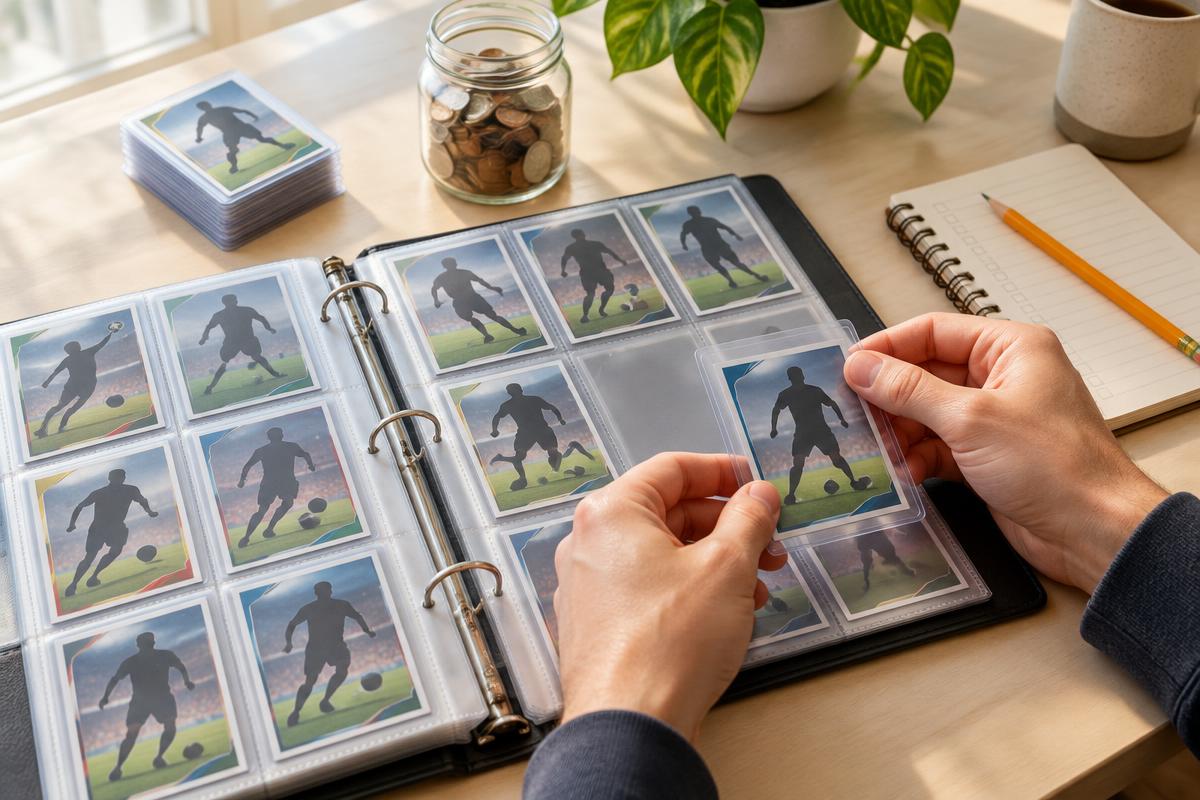
Football card collecting on a budget
Build a football card collection you enjoy with a spending limit, focused singles, sensible swaps and fewer impulse buys, without chasing returns.
Collecting · 6 October 2026
Sleeve, toploader, done: protecting your hits
The two-minute routine that keeps a card mint from the wrapper to the binder.
New to Whatnot?
Claim your free credit.
Sign up through the link and Whatnot drops credit on your account for your first show.