Collecting · 3 November 2026 · 4 min read
Match-worn vs player-worn football cards
Read football relic-card wording properly: match-worn, player-worn, event-worn and memorabilia, plus the checks to make before buying a patch card.
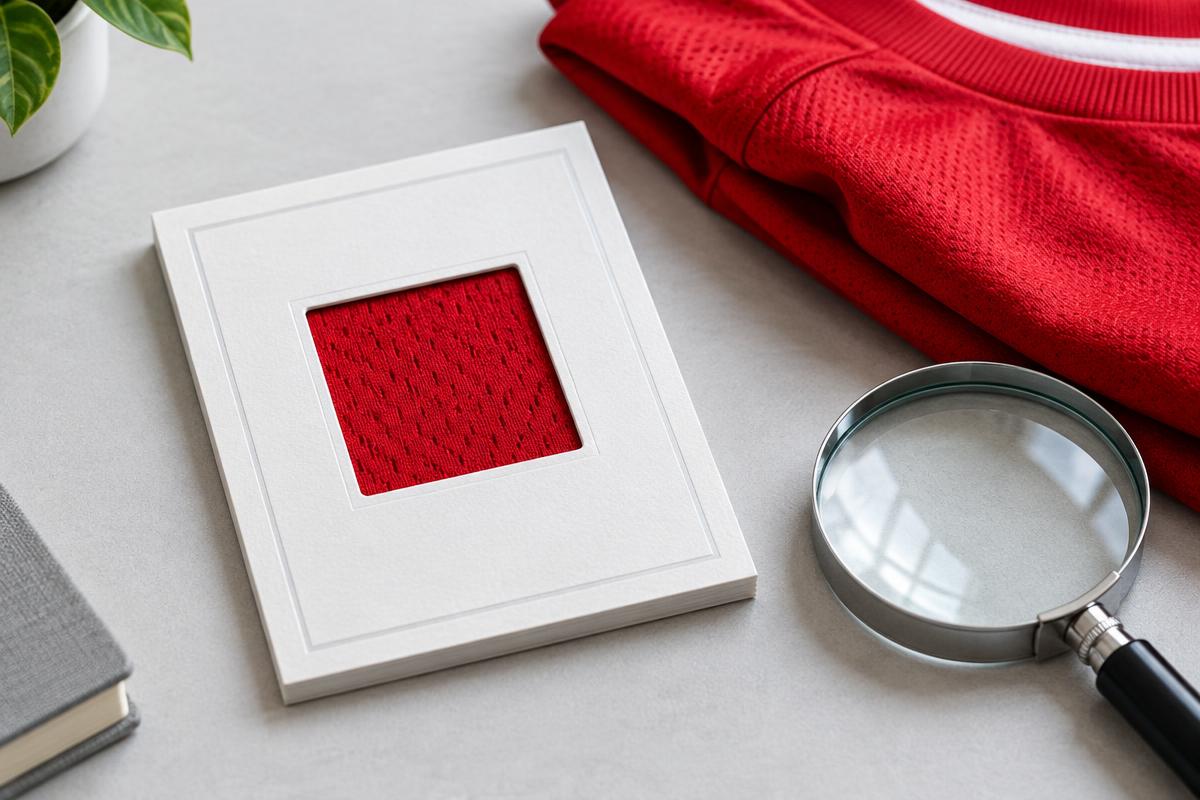
A piece of shirt in a football card is easy to get excited about. The colours catch your eye, the card feels substantial, and it looks like a small connection to the player. But the important detail is often on the back. Match-worn, player-worn, event-worn and memorabilia are not interchangeable descriptions. Before you buy, read what the manufacturer actually says about that particular piece of material. A striking patch, a famous name or a low serial number cannot fill in missing information about where the material came from.
What does match-worn mean?
In football, match-worn describes material worn during a match. Topps' glossary uses the term game-worn for memorabilia worn by a player in an official game and embedded in a trading card. That gives you a useful starting point, but not permission to embellish an individual card's history. If its wording does not identify a fixture, date or competition, you should not supply one yourself. A card can carry a game-worn statement without telling you which match the garment came from. Read the full certification rather than relying on a seller's abbreviated title.
Player-worn does not automatically mean match-worn
Player-worn tells you the manufacturer is making a claim about a player wearing the material; it does not, by itself, identify match use. Look for the rest of the wording and any supporting product information. If a listing calls a card match-worn but the photograph only shows player-worn, ask the seller to explain the difference before paying. This is not about dismissing player-worn cards. You might like the design or want that player in your collection regardless. It is about buying it for what it is, rather than paying for a story the card does not establish.
Event-worn and why the event matters
Topps defines event-worn separately from game-worn: the item was worn at an event, rather than a specific game. That distinction is useful when reading relic descriptions. An event-worn statement alone does not establish competitive match use, nor does it tell you the exact event unless that detail is supplied. Do not automatically describe it as a training shirt, presentation shirt or photo-shoot item either. Those are possible kinds of occasions, not facts about a card whose event is unspecified. Keep the description as narrow as the evidence.
Relic, memorabilia and patch describe different things
Relic is a broad collecting term for embedded memorabilia. Topps gives uniforms and gloves as examples in its game-worn definition and discusses other materials in its relic articles. Memorabilia therefore need not be a piece of football shirt. Patch is commonly used to describe a fabric feature, but an attractive multicoloured section is not proof of match use. Treat the material's appearance and its stated origin as separate questions. A plain swatch with a clear match-use statement and an elaborate patch with different wording are not necessarily equivalent purchases.
Read disclaimers instead of skipping them
If the card says its memorabilia is not associated with a specific game or event, preserve that limitation in your description. Do not turn an absence of a named game into a claim that you know its history. Equally, avoid declaring material fake solely because the wording is less specific than you hoped. Ask for a sharp photograph of the complete back, not a cropped image showing only the player's name. Different sets and manufacturers can use different wording; the claim on one release should not be transferred to another.
Numbering and grading cannot supply provenance
A /25 stamp describes a stated numbered run, not the event at which fabric was used. A 1/1 can be desirable without giving you a more detailed material history. Our serial numbers guide explains why numbering and pack odds are different questions too. Likewise, a condition grade does not identify a particular match for you. Use our PSA 9 vs PSA 10 guide for condition comparisons, then return to the manufacturer's wording for the relic claim. These details should support one another, not be used as substitutes.
A practical checklist before buying
Check the player, season, exact set and card number. Request front and back photographs and read the complete material statement. Compare the card with the correct checklist and reliable examples, including the parallel where relevant. Ask whether the seller has additional documentation for any specific match claim. Finally, compare like-for-like sales: a match-worn relic and a card with less specific memorabilia wording may not be useful price comparisons. Our sold-price guide covers the method without assigning invented values.
Buy the card, not an unsupported story
There is room in a collection for plain relics, elaborate patches and player-worn cards. Your preference can be about design, club colours or a football memory rather than resale. What matters is that the listing accurately describes the item. If you are watching an opening, pause long enough to see the back and ask about wording you cannot read. You can explore Craig's football-card repacks or watch a Whatnot show, but never assume every pack contains a match-worn relic. Contents depend on the specific listing, and opening a pack does not guarantee the card you want.
Sources and further reading
References checked on 3 November 2026. This guide is published by a football-card repack seller; it is not a manufacturer checklist or investment advice.
More collecting guides

Collecting · 3 November 2026
How to check football card sold prices
Find football card values using comparable sold listings, not hopeful asking prices. Check the exact set, parallel, grade, date and delivery cost.

Collecting · 3 November 2026
PSA 9 vs PSA 10 football cards
Understand PSA Mint 9 and Gem Mint 10 football cards, compare condition and sold prices, and decide whether a higher grade fits your collection.
Beginners · 29 October 2026
Football card serial numbers explained
What do /99, /25 and 1/1 mean on football cards? Learn to read serial numbers, identify parallels and compare the right cards before buying.
New to Whatnot?
Claim your free credit.
Sign up through the link and Whatnot drops credit on your account for your first show.