Set guides · 10 November 2026 · 4 min read
Topps Chrome football: history and values
Explore Topps Chrome football history, documented Mbappé and Yamal issues, Refractor identification and a practical method for checking card values.
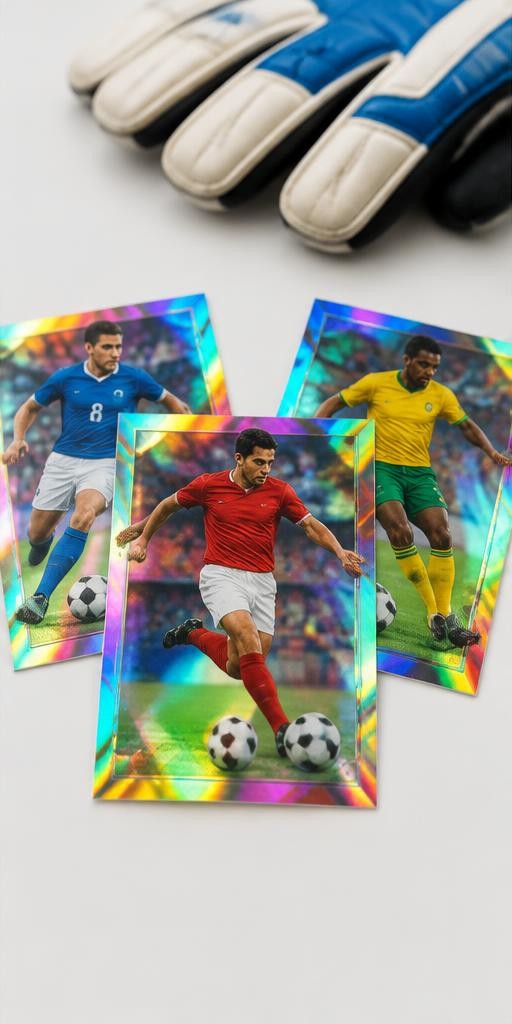
Topps Chrome football cards are not one uniform collection. Chrome identifies a brand and reflective card technology used across different competitions and seasons. UEFA club cards, tournament cards and league products need their own checklists. The most useful first question is therefore “Which Chrome release?” rather than “Is Chrome valuable?” Once the edition and version are clear, you can make a meaningful comparison with actual sales.
When did Topps Chrome football begin?
Topps’ brand history dates Chrome itself to 1996, with the chromium technology introduced earlier in 1993. It places the soccer debut at 2017/18 Topps Chrome UEFA Champions League. Those are different milestones: 1996 is not the launch date of the UEFA soccer set. Topps also describes later expansion into Bundesliga, Premier League, wider UEFA Club Competitions, women’s competition cards and MLS. Check a specific release for licensing and players rather than treating this history as a permanent licence map.
Key player issues to start researching
Topps highlights a Mbappé rookie in the first Champions League release. Our Mbappé guide separates early products so that “rookie” does not erase their different identities. For a newer documented example, Topps identifies Yamal 2023/24 Chrome UCC #64 as an RC issue, including a Superfractor /1 example. The ordinary base #64 and that one-of-one are not comparable values.
| Release | Example or feature | What to verify |
|---|---|---|
| 2017/18 UEFA Champions League | Mbappé rookie highlighted by Topps | Exact card and parallel before searching prices |
| 2023/24 UEFA Club Competitions | Lamine Yamal #64 | Base versus the named numbered version |
| 2024/25 UEFA Club Competitions | 400-card base set described by Topps | Checklist and format for this season only |
Base cards, Refractors and numbered versions
A matching player photograph does not establish a matching card. Read the finish, subset and any serial number against the edition’s checklist. A Refractor name alone does not supply a universal production quantity, and a colour’s denominator can change between seasons or subsets. Our checklist guide is useful when a seller mixes base and parallel keywords. Do not use the appearance of rainbow reflections in a photograph as the only identification evidence; ask for the reverse and printed details.
Why the box format matters to collecting
The documented 2024/25 UCC Hobby description lists 20 packs of four cards and one Chrome autograph, while the Value description has its own configuration and exclusive cards. Those statements belong to the named edition and format, not every Chrome box. Our Chrome versus Prizm comparison puts the official examples side by side. For one player, compare known singles before assuming opening sealed boxes is the best way to acquire a particular card.
How to value Topps Chrome football cards
Build the search from season, competition, player, card number, parallel and grade. Review completed sales for that combination, not a general player search full of autographs and different years. For an unnumbered base card, several ordinary transactions are more useful than one record-setting scarce-parallel result. For a numbered version, retain the denominator but consider whether the individual copy has an unusual stamp or visible condition difference. Our valuation guide explains why a crossed-out asking price is not always the final accepted amount.
Surface condition and grading comparisons
Reflective surfaces deserve angled photographs as well as a clear front and back. Scratches, print lines and corner wear can be obscured by glare or sleeves. A seller’s “PSA 10 potential” is not an assessment. When pricing a slab, compare the same grading company and numerical grade and read any extra label wording. Certification lookup is useful but does not remove counterfeit-holder risk. Keep raw values separate from slab prices until you have accounted for grading expense and uncertain outcomes.
Your Chrome collecting plan
Choose a club, player, base set or parallel project and price the exact target before buying. Save the identifiers and dates of the sales used in your notes, including delivery and applicable overseas charges for a UK order. If sales are sparse, give yourself a wider margin rather than claiming a precise price. Start with the Yamal card guide for a worked identification example, or browse the Topps hub for other formats. The cover is illustrative, not an image of a genuine Chrome card or a sale offer.
Sources and further reading
- Topps: Chrome soccer history ↗
- Topps: collecting 2024/25 Chrome UCC ↗
- Topps: documented Yamal Chrome #64 ↗
- Topps: official checklists ↗
- PSA: certification verification and counterfeit-holder warning ↗
References checked on 10 November 2026. This guide is published by a football-card repack seller; it is not a manufacturer checklist or investment advice.
More collecting guides

Player guides · 9 November 2026
Lamine Yamal rookie cards: buying guide
Identify Lamine Yamal rookie cards, compare documented Topps Chrome and Merlin issues, and check parallels, condition and sold prices before buying.
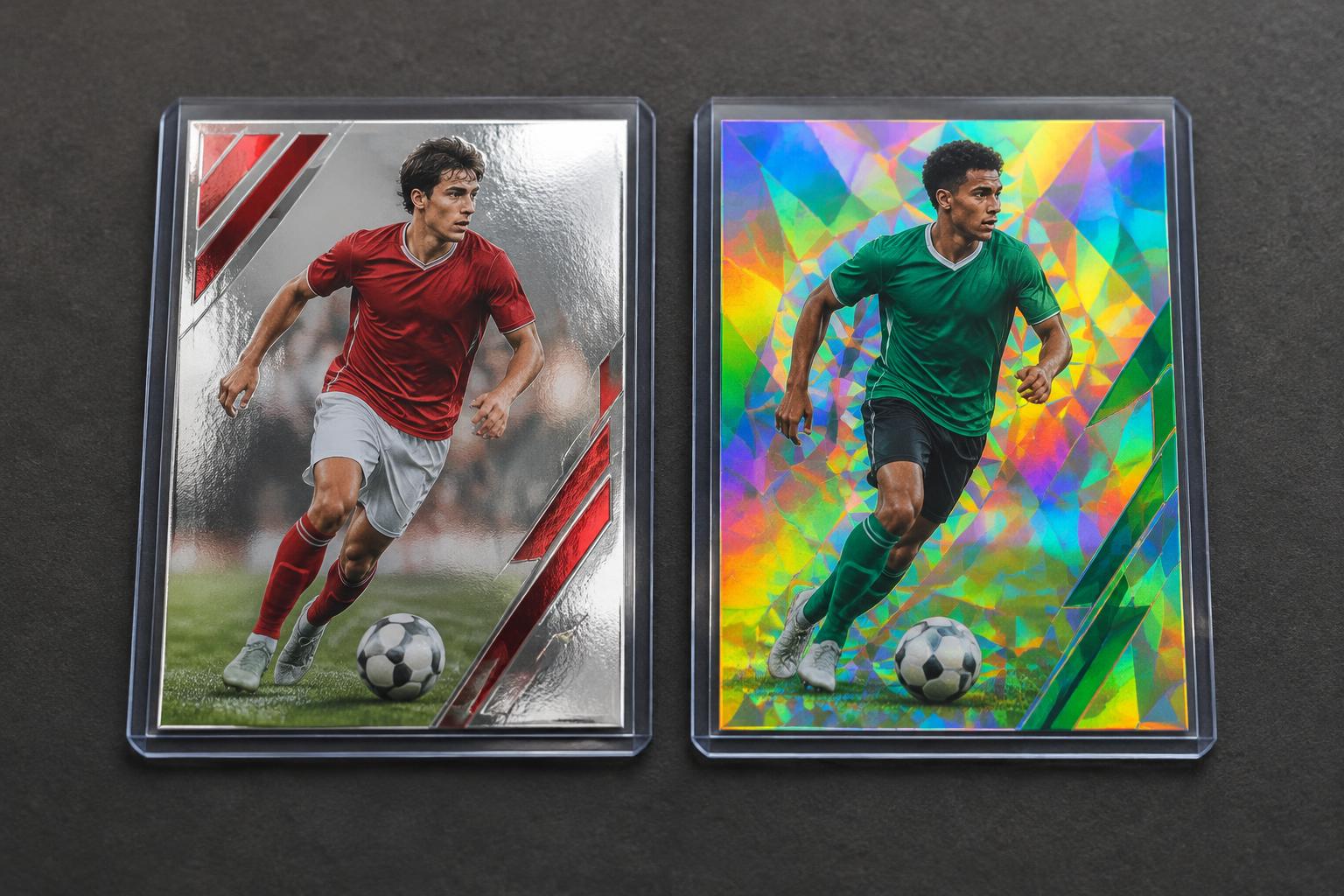
Collecting · 8 November 2026
Topps Chrome vs Panini Prizm football
Compare Topps Chrome vs Panini Prizm football cards by season, competition, checklist and box format, with documented examples and a buyer checklist.
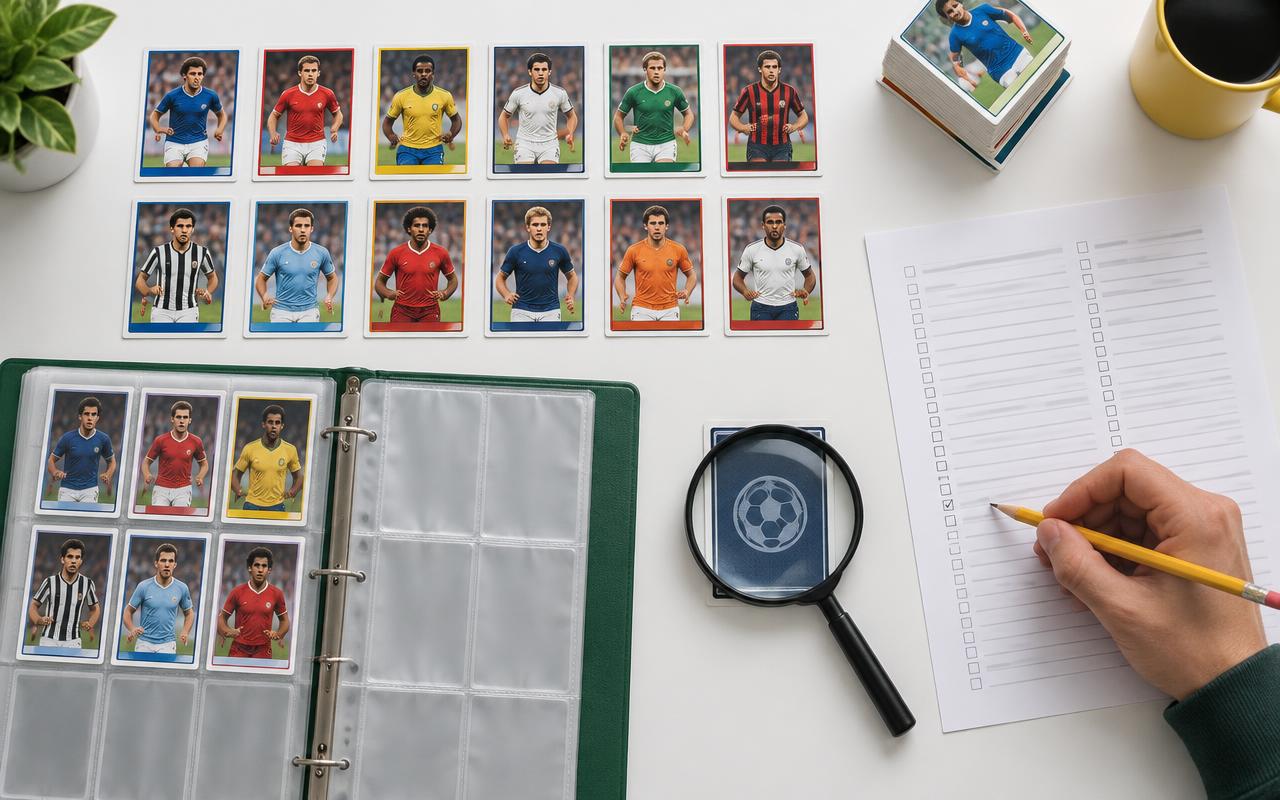
Collecting · 6 November 2026
Football card checklists and short prints
Use football card checklists to identify sets, parallels and image variations. Check SP and SSP claims without confusing card numbers with print runs.
Players · 4 November 2026
Mbappé rookie cards: #455 and #505 guide
Compare Mbappé rookie card #455 with Panini Foot sticker #505. Check the exact early Monaco issue, condition and sold prices before buying in the UK.

Collecting · 3 November 2026
How to check football cards value
Find football card values using comparable sold listings, not hopeful asking prices. Check the exact set, parallel, grade, date and delivery cost.
New to Whatnot?
Claim your free credit.
Sign up through the link and Whatnot drops credit on your account for your first show.