Collecting · 17 November 2026 · 5 min read
Topps Chrome refractor vs Prism: how to identify football-card parallels
Tell a base Chrome card from a standard refractor and a patterned Prism parallel, check the right football checklist, and build a manageable player rainbow.
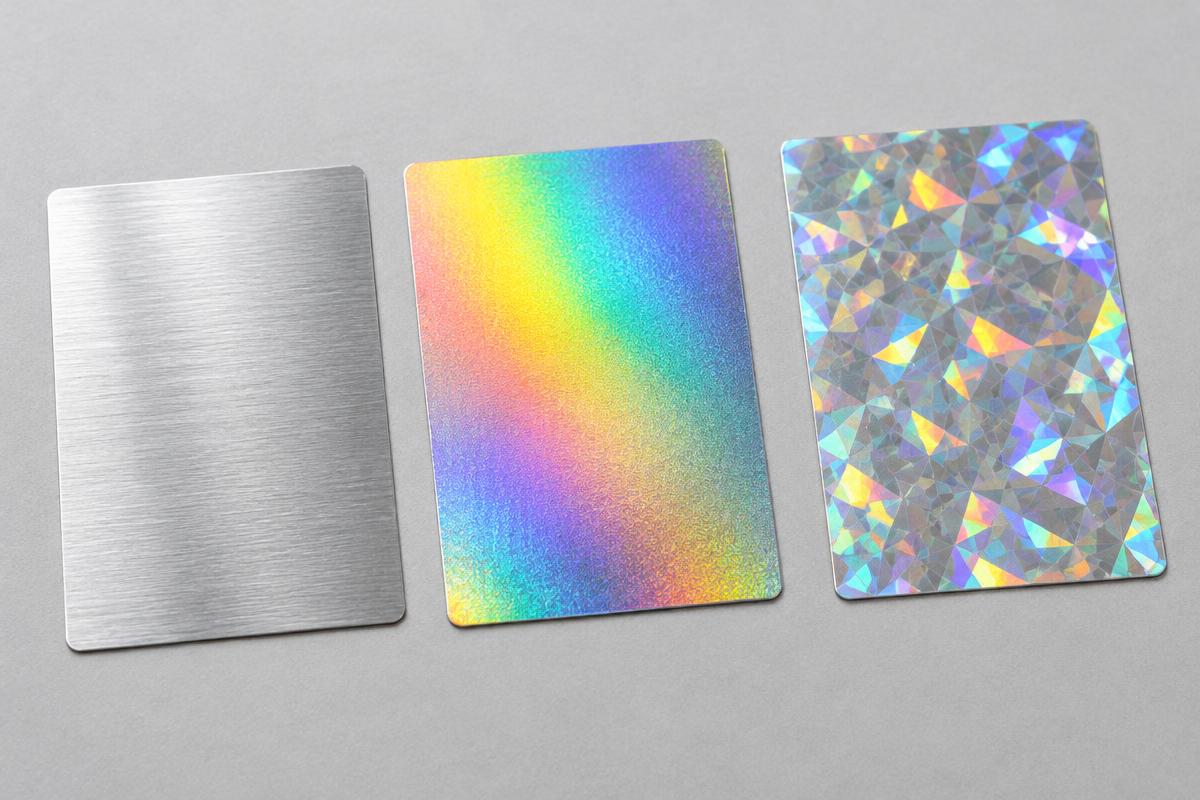
Two shiny football cards can show the same player and card number while being different versions. Chrome is the product context; Refractor and Prism are descriptions you need to check against the particular release. The useful question is not simply whether the card shines, but which parallel it actually is. This guide explains a careful identification method and a practical approach to collecting a player rainbow. The cover shows illustrative foil samples, not real Topps cards or guaranteed patterns for a specific set.
What is a Topps Chrome refractor?
Topps’ glossary describes a refractor as using printing technology that creates a prism or rainbow-like visual effect. Refractors can come in different colours and quantities, and many are numbered. That does not mean every shiny Chrome base card is a refractor, or that every refractor has a serial number. Compare the card with the base version from the same season and release, then check the official parallel list. Lighting helps you inspect the finish but does not replace the product evidence.
Standard refractor vs Prism refractor
Topps describes a true refractor as the standard refractor parallel of a base card or base autograph, retaining the underlying pose and layout rather than adding a coloured or patterned treatment. Its explanation distinguishes that version from alternatives such as Prism, Sepia and X-Fractor. For a football card, use the name in the exact checklist rather than deciding from a seller’s shorthand. A patterned finish and a plain rainbow finish should not be merged into one sale comparison merely because both are reflective.
| Description | Check before naming the card |
|---|---|
| Base Chrome | Match the base design in the correct release |
| Standard or true refractor | Confirm the standard parallel and its finish |
| Prism or other patterned parallel | Match the documented pattern and exact name |
| Colour or numbered parallel | Read the stamp and match the checklist category |
Prism is not Panini Prizm
The similar spelling is a source of avoidable confusion. A Topps Prism parallel and Panini’s Prizm product brand are not the same thing. Include the manufacturer and full product name in your records and searches. Our Chrome vs Panini Prizm guide compares those product families; this page concerns identification within Chrome. A seller’s use of “prizm” in a Chrome listing does not settle the official parallel name.
Look at both sides and change the light angle
Ask for clear photographs of the actual front and back, plus another angle if glare hides the finish. Record the season, set, player and card number before looking for a parallel. Read any printed designation and inspect any serial-number stamp, but do not assume a missing back label means base or a reflective photograph proves refractor. Product designs and labels vary. If the evidence remains ambiguous, ask for clarification rather than paying a premium for an unconfirmed version.
Use the exact football checklist and format
Premier League Chrome and UEFA Club Competitions Chrome are separate releases, with their own checklist and product formats. Read the correct season’s checklist and odds information, including whether the card is base, autograph or insert. Our Premier League Chrome guide and UEFA Chrome guide link their relevant product sources. A colour name from a baseball checklist is not proof of a football print run, and a Hobby inclusion is not automatically a guarantee in every retail format.
Numbered cards: denominator, odds and population differ
A stamp such as 12/50 describes an individually numbered copy within that stamped run; it is not a claim that only 50 cards of the player exist across all products. The same player may have other parallels, autographs and seasons. Pull odds concern opening products, while grading populations count recorded graded items, so neither should be substituted for a printed run. Read our serial-number guide for the distinctions. Do not estimate an unnumbered refractor’s print run just from its appearance.
Do not copy the Bowman /500 rule into football
Topps’ true-refractor explanation discusses the familiar silver /500 autograph in the context of Bowman Chrome and especially 1st Bowman baseball autographs. It also says standard refractors in other Chrome sets are not always numbered. That product context matters: the baseball example is not a rule that a true football refractor must be /500. Check the actual football card and source instead of applying a well-known hobby phrase more widely than its evidence allows.
How to build a football-card rainbow
A rainbow is a collecting goal around several versions of a chosen card. Define the scope before spending: one player, one season, one set and one base design is a manageable start. Use the checklist to create a want list and mark each verified parallel separately. Decide whether autographs, inserts and image variations are outside your scope. You can choose a small run of affordable versions rather than every possible card. A 1/1 chase may never become available, and no collection needs an unlimited budget to be enjoyable.
Compare exact-version sales, not just colours
For a buying decision, match the release, parallel name, stamp, condition and grading status. A patterned colour parallel should not be pooled with a differently named plain colour version without checking what each is. Compare several completed sales where available and note when the evidence is thin. Our sold-price guide gives the method. Rarity can matter, but it does not independently guarantee demand, a premium or future profit.
A reliable identification record
Save season, manufacturer, product, player, card number, parallel name and any serial stamp together. Keep clear private photographs and the source used for the identification. If the card changes hands, that record makes the description more precise without claiming professional authentication. Store it in an appropriate sleeve and holder and avoid rubbing the surface to improve its shine. The best starting point is a confidently identified card, not the most dramatic adjective in a listing.
Sources and further reading
- Topps Ripped: official refractor definition ↗
- Topps Ripped: official true-refractor definition ↗
- Topps Ripped: true refractors and differences between product families ↗
- Topps: 2026 Premier League Chrome Hobby product and checklist links ↗
References checked on 17 November 2026. This guide is published by a football-card repack seller; it is not a manufacturer checklist or investment advice.
More collecting guides
Set guides · 16 November 2026
Topps Chrome Premier League 2026: checklist, parallels and buying guide
Topps Chrome Premier League 2025/26 explained: the 200-card base set, Hobby box contents, official checklist and odds, autographs and UK buying checks.
Set guides · 11 November 2026
Topps Chrome UEFA Club Competitions: parallels and box guide
A practical guide to Topps Chrome UEFA Club Competitions 2024/25: hobby box contents, the Refractor rainbow, key inserts, rookies and what affects value.
Beginners · 29 October 2026
Football card serial numbers explained
What do /99, /25 and 1/1 mean on football cards? Learn to read serial numbers, identify parallels and compare the right cards before buying.
New to Whatnot?
Claim your free credit.
Sign up through the link and Whatnot drops credit on your account for your first show.