Collecting · 9 November 2026 · 5 min read
Card sleeves: football holder sizes
Choose football card sleeves, toploaders and magnetic holders by dimensions and thickness. Understand 35pt ratings and protect thick patch cards safely.
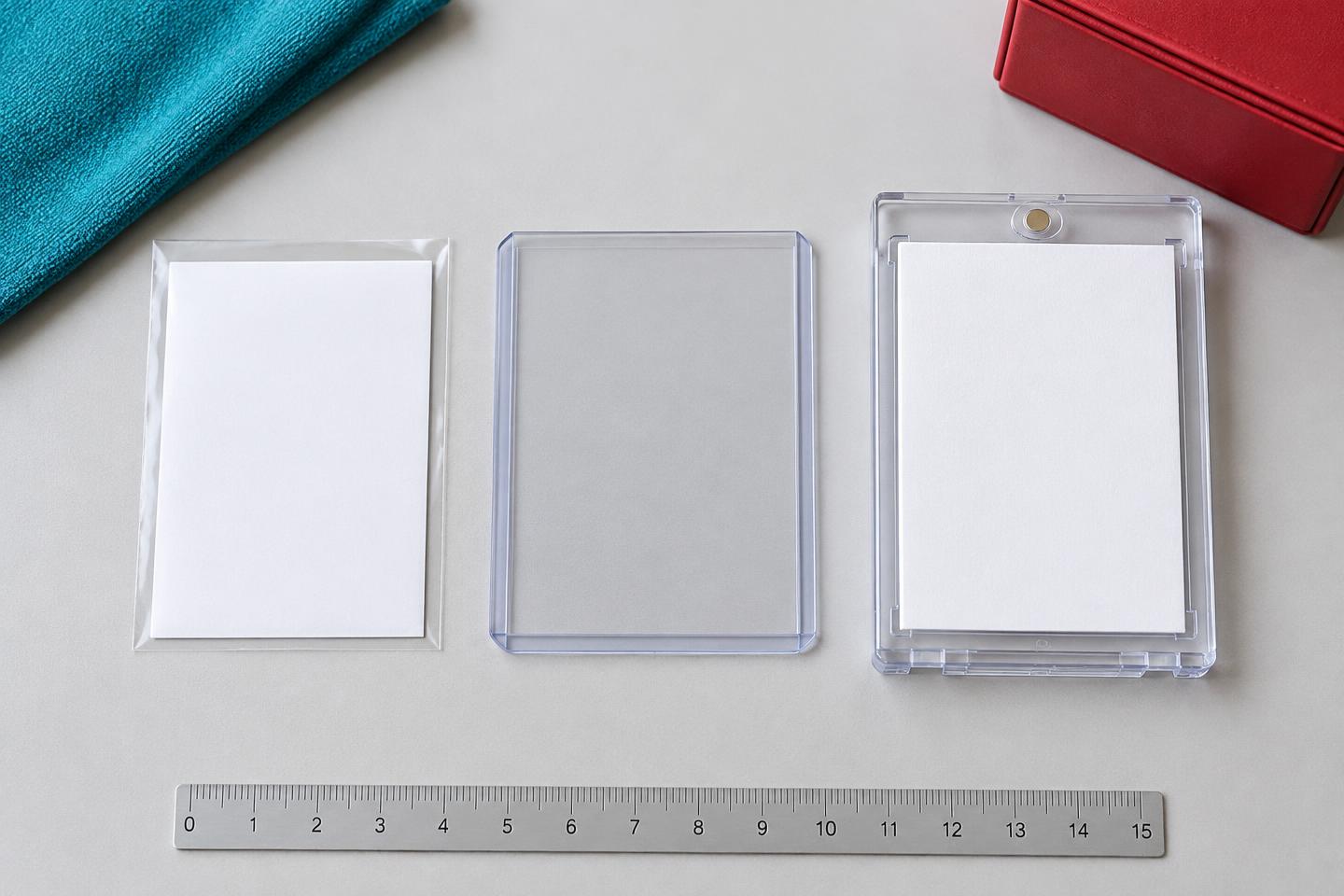
Choose a football card sleeve and holder by the card’s dimensions and thickness, not just by the player on the front. Many standard trading cards use a 2½ × 3½-inch format, but a thick memorabilia card needs a different capacity from an ordinary base card. A protective holder that presses on the corners or surface is the wrong holder, however expensive it was. This guide focuses on fit; our separate storage article covers where and how to keep the collection.
What size card sleeves fit football cards?
Ultra PRO describes standard-size cards as 2½ × 3½ inches, equivalent to 63.5 × 88.9 mm. Those are the card dimensions, not the outside dimensions of every accessory. The cited regular toploader is sold as a 3 × 4-inch holder for that standard format. Do not use those figures as a promise that every football collectible fits: stickers, older issues, oversized cards and unusual formats need their own check. Read the accessory specification and measure the actual item if you are unsure.
What does 35pt mean?
Pt is a thickness unit. BCW defines one point as 0.001 inch, or 0.0254 mm. A 35pt rating therefore corresponds to 0.889 mm. That is a thickness measurement, not the card’s width, its grade or the amount of protection promised. Ultra PRO lists its cited regular toploader for cards up to 35pt. This is that product’s capacity statement; it does not prove all standard base cards have exactly the same thickness or that every brand’s similarly named holder behaves identically.
| Label | Meaning | Practical check |
|---|---|---|
| 2½ × 3½ inches | Standard card face dimensions cited by Ultra PRO | Confirm your card has that format |
| 3 × 4-inch toploader | The cited holder’s product size | Check the supported card dimensions separately |
| 35pt | A thickness rating: 0.889 mm by BCW’s unit definition | Read the exact holder’s capacity and check fit |
| 55pt or another capacity | A different thickness rating | Choose from measurement, not an assumption about all patch cards |
Sleeve first, then a suitable toploader
For ordinary toploader storage, start with a clean sleeve intended for the card’s dimensions and thickness. On a clean, dry surface, guide the card into the sleeve without catching a corner. Then use an appropriately sized rigid holder. Stop if you need to push hard, if the sleeve bunches or if the card appears to bow. Do not press on the top edge to make it drop. The correct solution is a better fit, not more force. Our safe storage guide covers handling, binders and avoiding damp or direct sunlight.
How to choose a holder for a patch card
Check the physical card rather than guessing from the memorabilia window. A card with a large visible patch is not automatically thicker than every card with a small one. Use a manufacturer’s thickness guide or suitable measuring method and compare the result with the particular holder’s specification. Keep measuring tools from scratching or squeezing the card. If you cannot establish the fit confidently, ask a supplies retailer with the dimensions and a clear description before ordering.
Are magnetic holders better than toploaders?
They serve different preferences and formats; neither name guarantees a perfect fit. A magnetic holder may suit a display, but the card needs to sit correctly in its recess and the lid must close without pressure. Sleeve compatibility also belongs to the specific holder: do not assume every magnetic case accepts an ordinary penny sleeve inside it. Read its instructions. A toploader can be a practical storage choice when properly fitted and used with a suitable sleeve. Choose protection around the card, not a case because it looks more valuable.
| Item or goal | Starting point | Avoid |
|---|---|---|
| Ordinary raw single | Fitted sleeve and appropriate toploader | A tight sleeve or forced insertion |
| Thick memorabilia card | Thickness check and a holder rated for that card | Assuming every relic fits one capacity |
| Display piece | Compatible magnetic holder with instructions checked | Closing a lid that compresses the card |
| Set-building binder | Correctly sized collectible-card pockets | Overfilled pockets or a binder pressing on cards |
Too loose can be a problem too
Sizing up without checking is not a complete solution. A card moving freely inside an unsuitable holder can still knock against its surroundings. Look for a fit that supports the card without compressing it, following the accessory maker’s directions. Do not improvise with adhesive against the card or pack a recess with material that presses on the surface. If a holder is not right, keep the card safely protected while you obtain an appropriate one.
Protection does not establish authenticity
A beautiful holder does not authenticate the signature, establish that a relic is match-worn or create a condition grade. Keep those questions separate. Read the actual card-back wording and product evidence; our match-worn and player-worn guide explains the distinctions. A magnetic case is not the same as a graded slab, and transferring a raw card into one does not make a seller’s ‘would grade ten’ prediction more reliable.
Storage, postage and grading use different checks
A fitted holder is only one part of posting a card. Outer packaging must also limit movement and bending, and the chosen delivery service needs to suit the shipment. Use our UK posting guide for that process. Grading companies may request different submission holders and packaging, so follow the chosen service’s current instructions before sending anything. Do not assume your favourite display case is accepted.
A five-minute supplies checklist
Identify the card format; check its thickness; read both the sleeve and holder specifications; test the fit gently; and store it without pressure. Order around what you actually collect: an ordinary club binder and a collection of thick autograph-patch cards have different needs. You do not need to put every inexpensive base card into a magnetic case. Spend on appropriate protection, not unnecessary bulk. The cover shows illustrative blank cards and accessories rather than branded products or a sizing template.
Sources and further reading
- Ultra PRO: regular toploaders for standard-size cards ↗
- BCW: what thickness of card holder do I need? ↗
References checked on 9 November 2026. This guide is published by a football-card repack seller; it is not a manufacturer checklist or investment advice.
More collecting guides
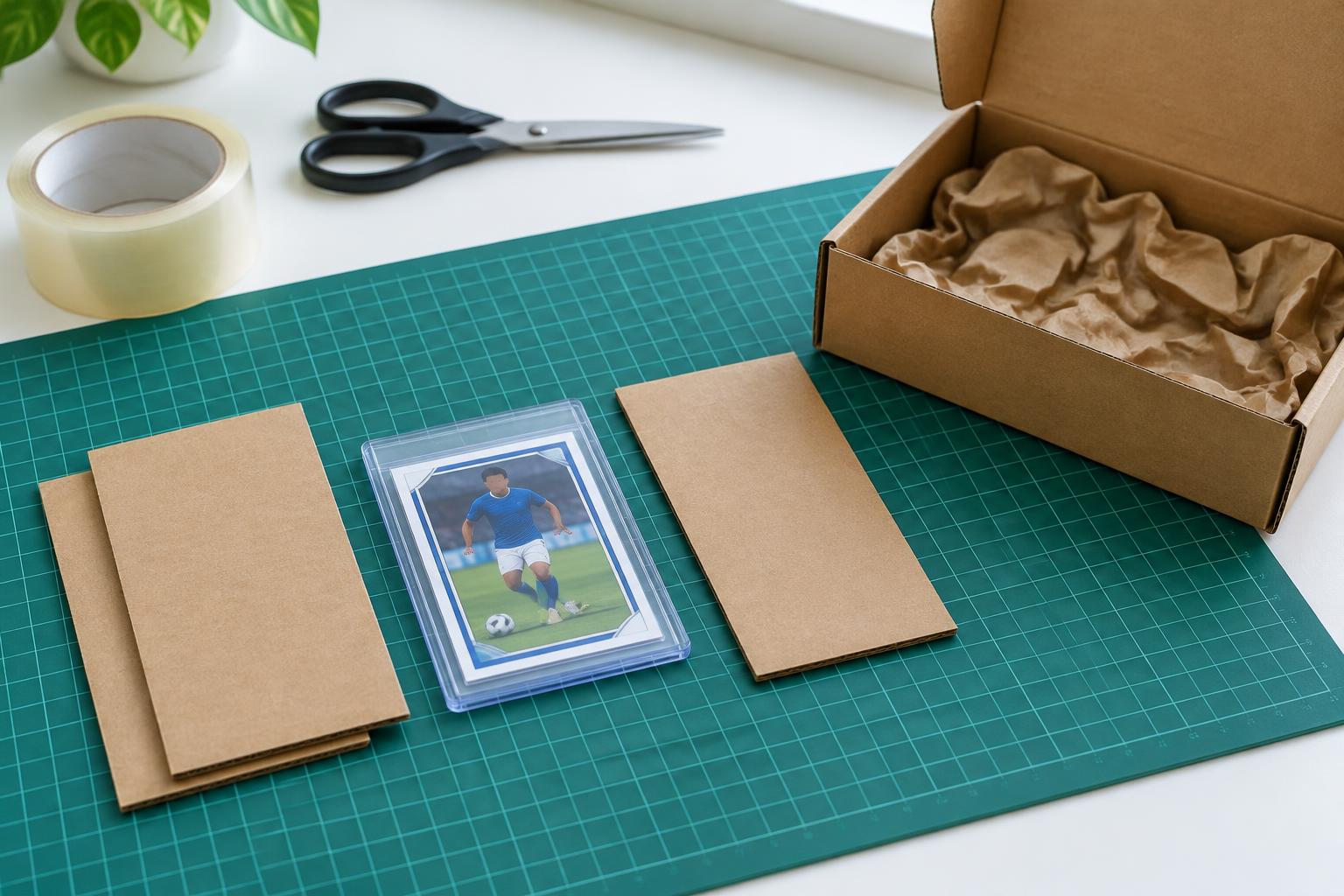
Collecting · 8 November 2026
How to post trading cards in the UK
Post football trading cards safely in the UK: pack singles and slabs, check delivery cover, follow eBay's order details and keep dispatch evidence.
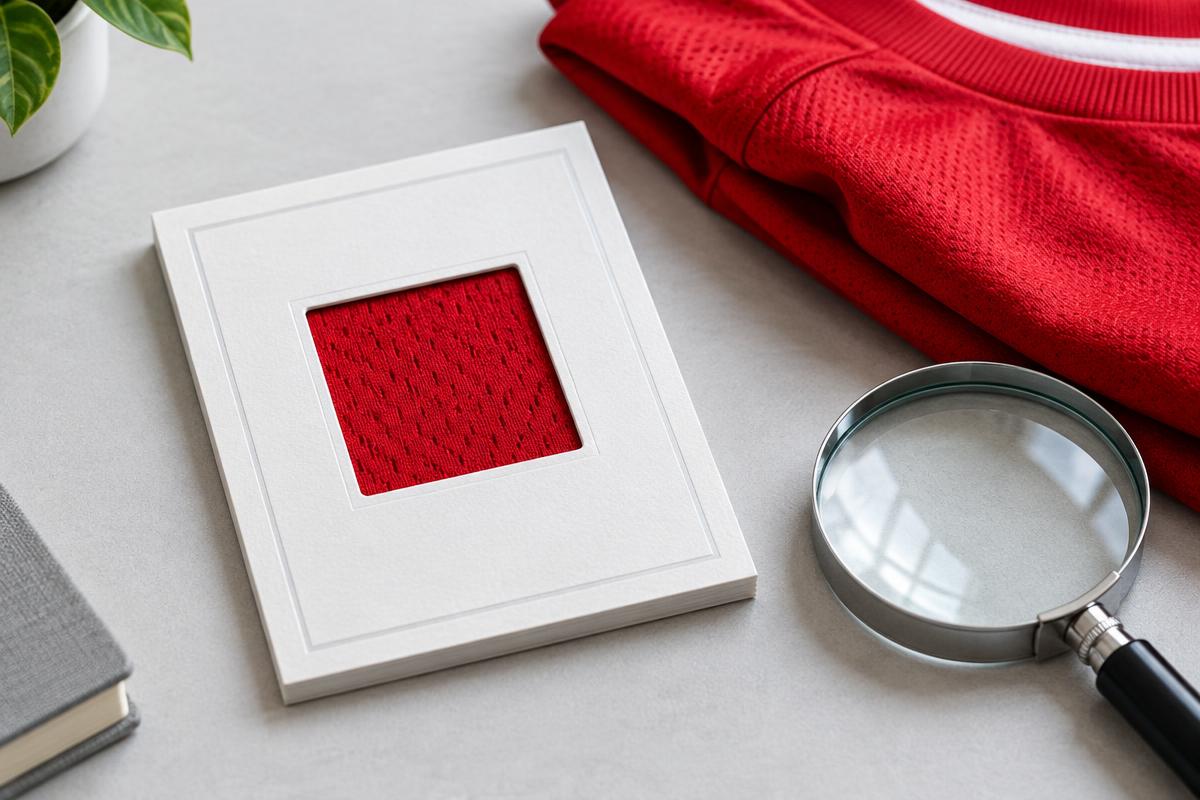
Collecting · 3 November 2026
Match-worn vs player-worn football cards
Read football relic-card wording properly: match-worn, player-worn, event-worn and memorabilia, plus the checks to make before buying a patch card.
Collecting · 6 October 2026
How to store football cards safely
Store football cards with sleeves, fitted holders and safe binder habits. Protect corners and surfaces, avoid damp and prepare separately for grading.
New to Whatnot?
Claim your free credit.
Sign up through the link and Whatnot drops credit on your account for your first show.