Set guides · 10 November 2026 · 5 min read
Topps Museum 24/25 checklist: identify your soccer cards
Use the Topps Museum 24/25 UEFA checklist to separate base parallels, autographs and relics, match card codes and research the right sold-price comparisons.
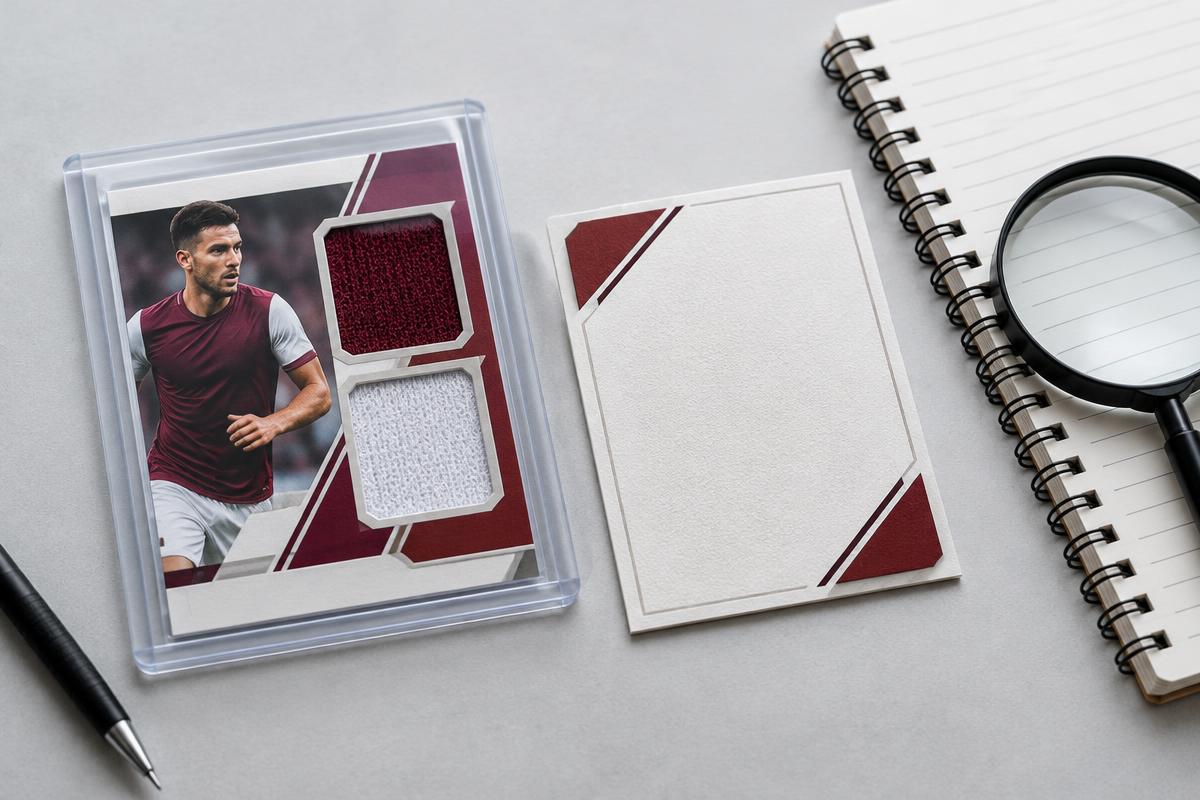
The Topps Museum 24/25 checklist is most useful when it helps you name the card in your hand. Searching only a player and “Museum” mixes different seasons, ordinary relics, autograph relics and framed signatures. That is a poor starting point for either a want list or a valuation. Begin with the full 2024/25 UEFA Club Competitions release, then match the front, reverse and printed code. This is a practical reading guide, not a reproduced complete checklist or a statement of current stock. Use the linked official checklist for the complete player-by-subset list.
Make sure you have the UCC edition
Museum Collection existed as a Champions League football product before this named UCC release. Checklist Insider distinguishes the 2024/25 UEFA Club Competitions collection from earlier UCL issues, so “first UCC product” does not mean “first Museum soccer cards”. Seller titles may use calendar years differently from the printed season. Retain photographs of both sides and verify the release against the matching checklist. A 2023 card of the same player can be useful collecting context, but it is not automatically a comparable sale for a 24/25 copy. Our Museum buying overview covers the product background.
Read the card category before the colour
Topps describes a 100-card base collection and distinct autograph, autograph-relic and relic categories for this Hobby product. Checklist Insider lists the base parallels below, with a matching list in the cited retailer’s product details. The denominator belongs to this base category; do not apply it to every Museum autograph or relic with the same colour name. A colour resemblance in a photograph is weaker evidence than the printed serial number and checklist entry. Reflective finishes and lighting can alter appearances, so ask for another image when the numbering is unclear.
| Base parallel | Listed numbering | Identification check |
|---|---|---|
| Amethyst | /99 | Match base card and printed denominator |
| Sapphire | /75 | Do not substitute a relic Sapphire issue |
| Gold | /50 | Keep base parallel separate from framed autograph |
| Amber | /35 | Confirm number on the actual card |
| Ruby | /25 | Check category as well as colour |
| Black Diamond | /10 | Not a grade or guaranteed demand |
| Emerald | 1/1 | Exact copy matters; no like-for-like second copy |
Autograph names describe different designs
The product description names Archival Autographs, Archival Dual Autographs and Framed Autographs alongside on-card Legendary Ink and Supreme Script autograph books. Those are different routes through the checklist, not interchangeable versions of one card. Find the player in the actual subset before assuming they appear in every category. The specific on-card description of Legendary Ink does not establish the signing method of every other autograph. When the listing shows only the front, ask for the complete authentication wording on the reverse. A printed signature in a design is not the same thing as an authenticated autograph.
Relic and autograph-relic checks
Museum Autograph Relics and Single Player Signature Swatches Dual Relic Autographs are not plain base parallels. Topps also names Museum Rookie Connection Dual Autograph Relics and Home/Away Dual Relic Autographs. A multi-window patch, club-coloured fabric or dramatic product name does not prove a particular match. Read the individual card’s material statement, not a seller’s story copied from a different release. Our memorabilia wording guide explains the difference between material descriptions. For valuation, keep a plain relic separate from a signed relic, and preserve photographs because patch appearance may influence collector preference.
Build a useful identification note
Write down the printed season, competition, player or players, subset, card code, serial number and present condition. For a slab, add the grading company, numerical card grade and any separate autograph grade. For a book, retain open views as well as its closed cover. Do not fill a missing field from another listing because the front looks similar. A checklist confirms that an issue is documented; it does not prove that the copy is genuine, that the signature is correctly represented or that an advertised card remains inside an unopened pack. Keep the identification note with the actual photographs.
From the checklist to a price comparison
Once the card is identified, look for completed sales matching its season, code, parallel and condition. Do not average a base Gold /50 with an autograph Gold issue simply to produce a number. A 1/1 may have no identical comparable; use related evidence cautiously and explain the differences. Our Topps sold-price tracker includes a dated earlier Museum Yamal authenticated autograph example, not a 24/25 set average. Its separate autograph ten is not a PSA 10 card grade. That distinction can change the entire comparison. The sold-price guide explains why visible asking prices and reported transactions stay separate.
Check condition without confusing protection and grading
A thick Museum card needs a holder that fits rather than one that compresses its edges. Inspect corners, surface, patch-window edges and, for books, hinges and opened panels. A magnetic holder protects a card but does not assign a numerical grade. Verify a slab’s certification details against the exact copy and remember that a genuine certification number alone does not eliminate counterfeit risk. Before a submission, check the chosen service’s current acceptance and packaging rules for the particular card type. Budget for plausible lower-grade outcomes and costs instead of assuming every attractive patch deserves a paid grading service.
What a checklist cannot tell you about a repack
Finding a player in the Museum checklist does not establish that Craig has that card or that a supplier included it in a current run. The manufacturer’s Hobby description—eight cards with separate signature and relic categories—does not become the configuration of a repack assembled from existing singles. Ask for the repack’s own terms, disclosed contents and valuation date. A pictured chase is not a probability. Use the repack valuation guide to distinguish card evidence from pack promises. The goal is a better-informed purchase, not a precise figure generated from incomplete information.
A final checklist before buying a Museum single
Match the season and category; read the code and denominator; inspect front and reverse; separate card grade from autograph grade; check the material wording; and retain several close dated sales when available. If the evidence does not support a price, leave the valuation open rather than borrowing a headline result. For a sealed opening, read current format and delivery terms separately. For broader product comparisons, see Inception boxes versus singles. This guide targets soccer identification, not another sport’s Museum checklist, and its cover is an illustrative scene rather than genuine Topps inventory.
Sources and further reading
- Topps: official checklists, select the exact 2024/25 Museum UCC release ↗
- Topps: 2024/25 Museum Collection UCC Hobby product ↗
- Checklist Insider: 2024/25 Museum UEFA checklist and base parallels ↗
- Steel City Collectibles: 2024/25 Museum Hobby product details and parallel list ↗
- PSA: certification verification ↗
References checked on 10 November 2026. This guide is published by a football-card repack seller; it is not a manufacturer checklist or investment advice.
More collecting guides
Buying guides · 10 November 2026
Is Topps Inception soccer worth it? Boxes vs singles
Compare Topps Inception soccer boxes with known singles: 24/25 and 2025/26 contents, dated asking prices, grading costs and a sensible buying budget.
Set guides · 10 November 2026
Topps Museum Collection soccer: a buying guide
Understand 2024/25 Topps Museum Collection UEFA soccer boxes, autograph and relic cards, checklist research, condition and how to compare single-card values.
Collecting · 3 November 2026
Match-worn vs player-worn football cards
Read football relic-card wording properly: match-worn, player-worn, event-worn and memorabilia, plus the checks to make before buying a patch card.

Collecting · 3 November 2026
How to check football cards value
Find football card values using comparable sold listings, not hopeful asking prices. Check the exact set, parallel, grade, date and delivery cost.
New to Whatnot?
Claim your free credit.
Sign up through the link and Whatnot drops credit on your account for your first show.