Set guides · 10 November 2026 · 5 min read
Topps Museum Collection soccer: a buying guide
Understand 2024/25 Topps Museum Collection UEFA soccer boxes, autograph and relic cards, checklist research, condition and how to compare single-card values.
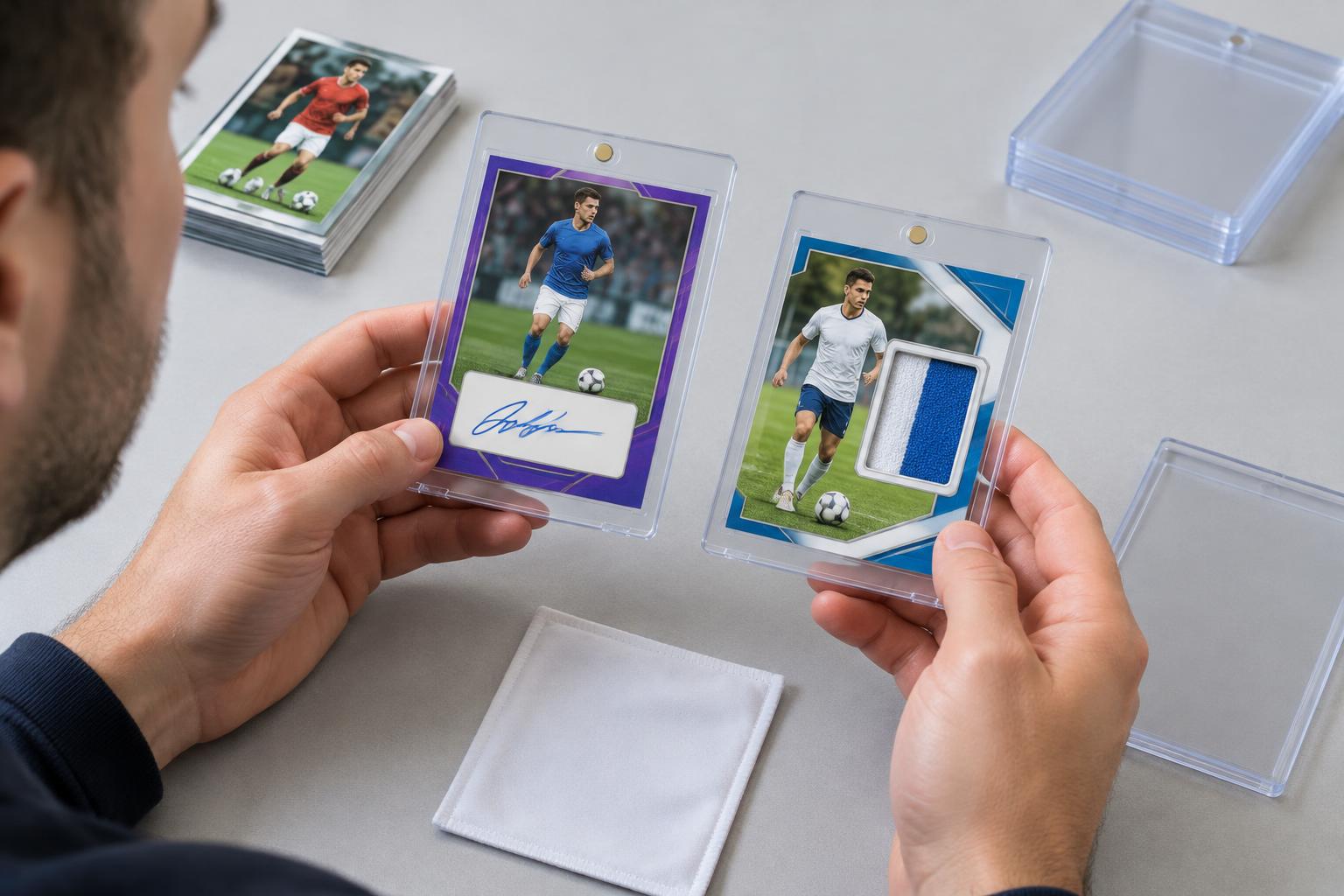
Topps Museum Collection soccer appeals to collectors who want signatures and memorabilia in the same opening. That does not mean every box contains a high-value superstar, or that every piece of fabric carries the same provenance. The useful buying question is what the named edition includes and which cards you would actually enjoy owning. This guide focuses on the documented 2024/25 UEFA Club Competitions Hobby release, separates its card types and explains how to research singles without treating the word “Museum” as a valuation.
Which Museum Collection soccer release is this?
Topps calls its 2024/25 UEFA Club Competitions product a new UCC collection. Checklist Insider distinguishes it from earlier Museum products associated with the Champions League. That is not evidence that Museum made its first-ever football cards in 2024/25. Keep the full release title and season in your notes. The manufacturer’s pre-order text refers to a scheduled 30 December 2025 release and warns that dates can change. The season printed in the product name is different from the calendar date. It is also not a promise about when a shop will dispatch an order today.
What does a 2024/25 Hobby box contain?
The official page lists one pack with eight cards and specifies one base parallel, one autograph, one autograph relic and one relic. It also describes a 100-card base collection. Those are manufacturer statements for the named Hobby product, not a guarantee of a particular signer or sale price. Do not apply them to another format or a repack. Checklist Insider describes a separately named Hat Trick format, which is another reason to identify the box rather than relying on the brand alone.
| Category | Listed amount | Meaning for a buyer |
|---|---|---|
| Pack/cards | 1 pack of 8 | Match the edition and format |
| Base parallel | 1 | Identify the particular version |
| Autograph | 1 | Signer and subset still vary |
| Autograph relic | 1 | Inspect signature and material wording |
| Relic | 1 | Not automatically a match-worn named-event piece |
The autograph subsets are not all the same
Topps names Archival Autographs, Archival Dual Autographs and Framed Autographs, alongside on-card Legendary Ink Autographs and Supreme Script Autograph Book Cards. It also describes Museum Autograph Relics and Single Player Signature Swatches Dual Relic Autographs. These names help organise a want list, but a player appearing in one category does not prove they appear in all of them. The specific on-card wording for Legendary Ink does not establish that every other subset uses the same signing method. Match the code, photograph and authentication statement when comparing a listing to the checklist.
Relics: read the reverse before repeating the story
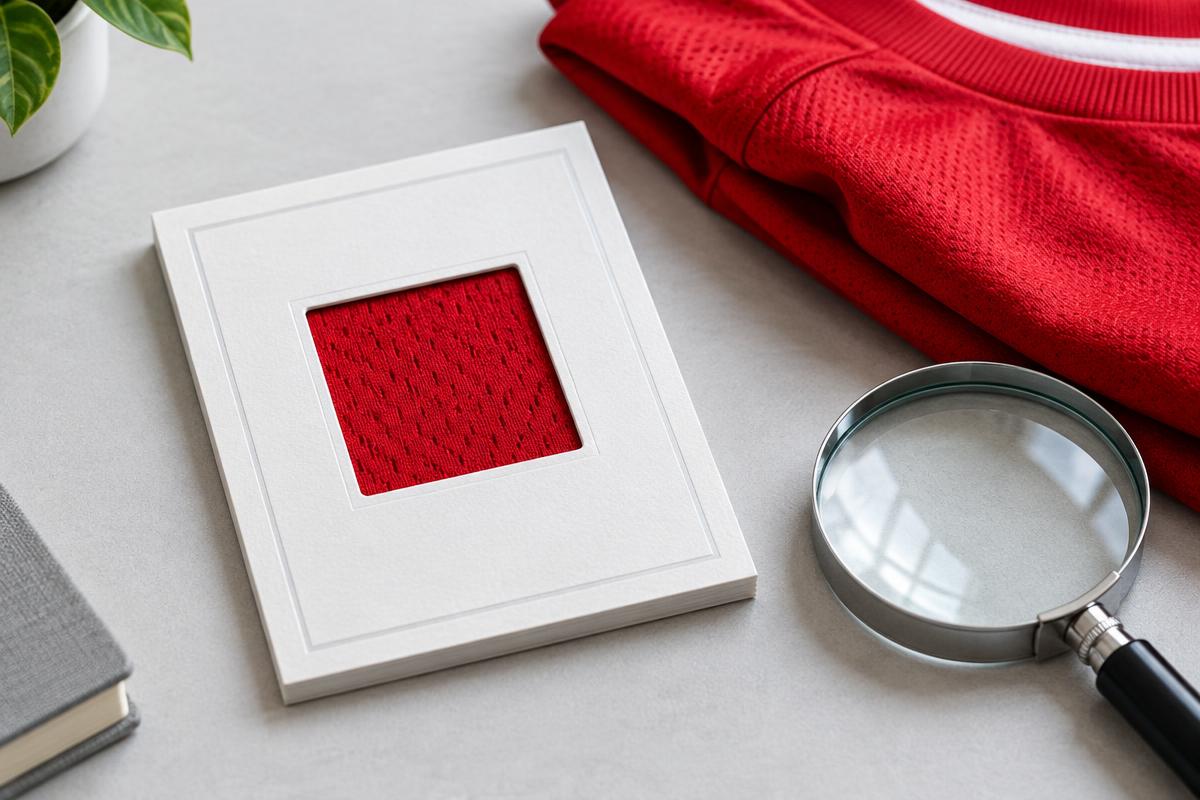
A large swatch, club-coloured patch or multi-window design can be attractive without proving a named match. Check the complete reverse wording of the individual card. Do not transfer the material description from another Museum subset or from Dynasty. Topps names new categories including Museum Rookie Connection Dual Autograph Relic Cards and Home/Away Dual Relic Autograph Cards; the names themselves do not authenticate every detail of a seller’s account. Our memorabilia wording guide explains why match-worn, player-worn and other descriptions should remain distinct. Ask for the back even if the front is the part you want to display.
Use the checklist for exact identification
Locate the season-specific official checklist and use a specialist checklist as supporting research, not as a substitute for the actual copy. Record the player, code, subset and denominator. Keep base parallels separate from autograph parallels; similar colours can describe different categories. Do not invent a print run for an unnumbered card from the number of graded copies. A checklist entry is not proof of availability in the next box or of inclusion in a supplier’s current repack. If a card is missing from the version you are consulting, investigate the release and identifier before assuming an error or a counterfeit.
How to value a Museum Collection card
Compare completed sales for the closest matching design and condition. A plain relic, an autograph relic and a framed autograph of the same player need separate comparisons. Patch appearance can affect collector preference, so retain photographs rather than just the serial denominator. Note the date, currency, buyer premium and visible accepted-offer information. A seller’s active price is an expectation, not proof that another buyer paid it. If only loosely related sales exist, describe them as weak context rather than generating a precise figure. Our sold-price guide sets out a practical method. This article supplies no invented current Museum price range.
Storage and grading for thick cards
Inspect corners, edges, surface and the area around memorabilia windows in good light. A thick card needs a correctly fitted sleeve and holder; forcing it into a narrow toploader can create damage. For a book, check the hinges, opened views and protective storage rather than judging from its closed cover alone. A factory or magnetic holder is not a numerical grade. Before submitting, check whether your chosen grading service accepts that exact type and how it should be packaged. Compare fees and likely lower-grade outcomes as well as the hoped-for result. Our card-care guide is useful before you handle the item.
Museum versus Inception and Dynasty
For the cited Hobby editions, Museum’s separate signature and relic categories make its opening different from Inception’s seven-card box with one autograph and two numbered parallels. Dynasty has its own encased autograph-patch focus and release details. More cards or more named hits do not automatically produce more resale value. If a particular autograph is your goal, research the known single first. If you prefer the reveal, budget for the opening without assuming it will pay for itself. Compare today’s actual delivered listings instead of comparing historic launch prices to current single-card asks.
Before buying Museum in a repack
Ask whether you are buying a sealed manufacturer pack, known Museum singles or a mystery selection containing some Museum cards. Those are different purchases. The original Hobby configuration does not become a promise about a repack’s contents, odds or floor. Our Topps repack valuation guide separates card values from pack prices and the opening experience. Confirm the seller, order details and international costs before paying. The cover here is illustrative, not genuine Museum stock, and this article does not establish Craig’s current availability or a supplier’s selling price.
Sources and further reading
- Topps: 2024/25 Museum Collection UCC Hobby box ↗
- Checklist Insider: 2024/25 Museum Collection UEFA checklist ↗
- Topps: official checklists ↗
- PSA: grading standards ↗
References checked on 10 November 2026. This guide is published by a football-card repack seller; it is not a manufacturer checklist or investment advice.
More collecting guides
Set guides · 10 November 2026
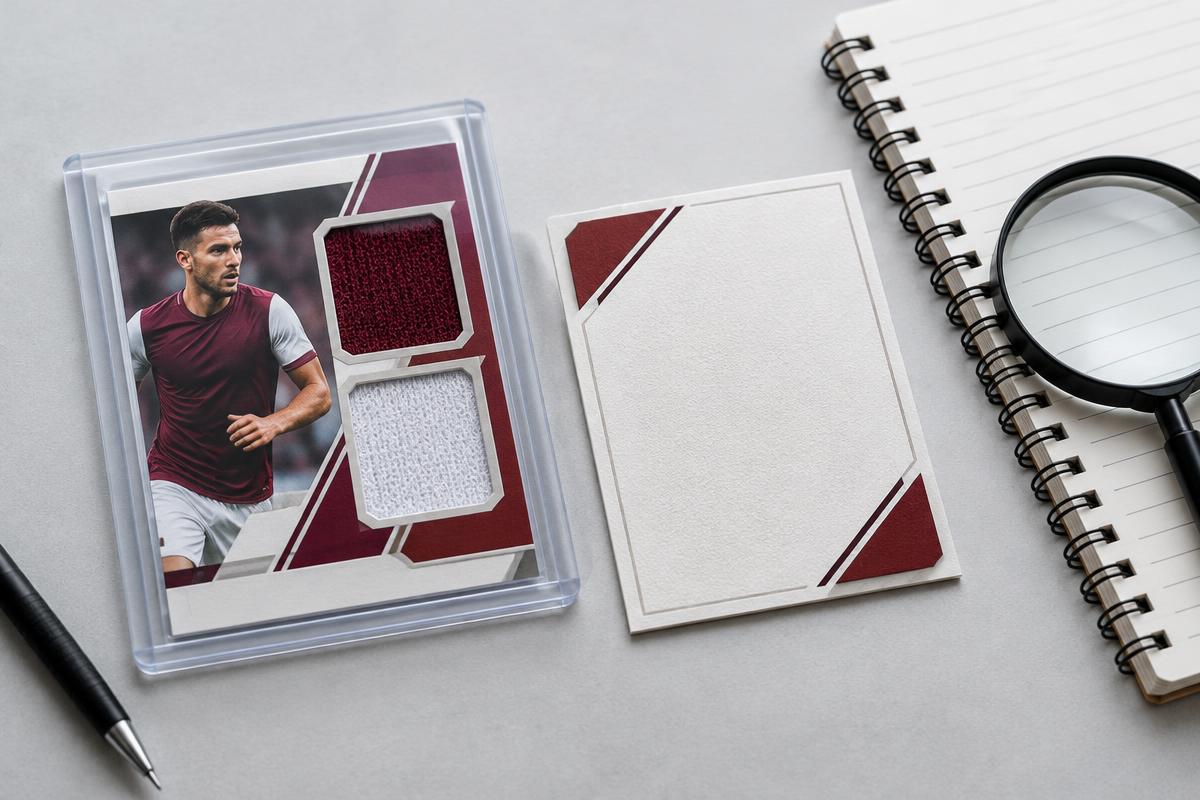
Topps Museum 24/25 checklist: identify your soccer cards
Use the Topps Museum 24/25 UEFA checklist to separate base parallels, autographs and relics, match card codes and research the right sold-price comparisons.

Set guides · 10 November 2026
Topps Inception soccer: cards, boxes and values
Explore 2024/25 Topps Inception UEFA soccer cards, the documented Hobby box contents, autograph subsets and sensible checks before buying or grading.
Buying guides · 10 November 2026
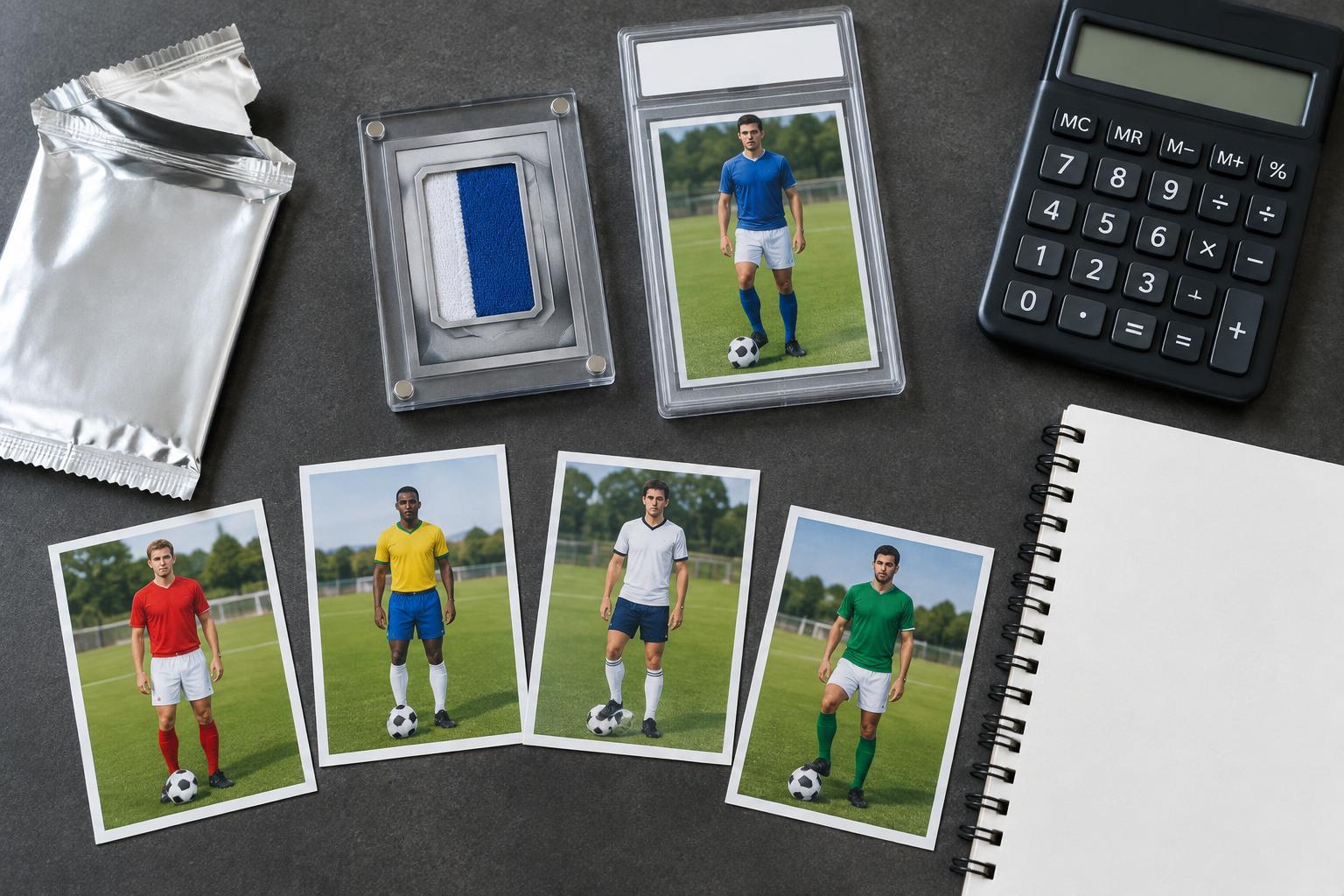
How to value Topps football-card repacks
Value Topps repacks by set, exact card, condition and demand. Compare dated auction sales, grading costs and disclosed contents before setting your budget.
Set guides · 10 November 2026
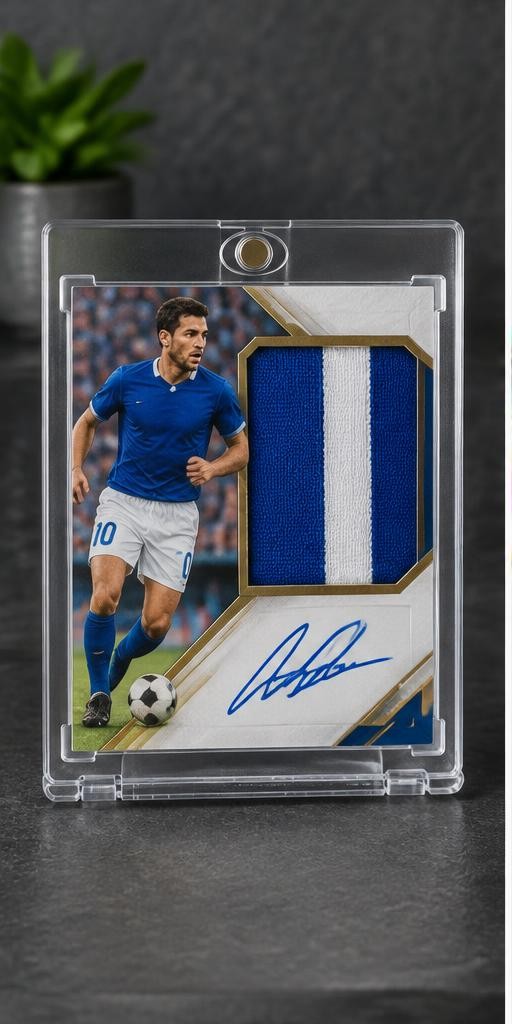
Topps Dynasty: history, cards and values
Trace Topps Dynasty football releases, identify documented Messi and Ronaldinho cards, and compare autograph patches using matching sold-price evidence.
Collecting · 3 November 2026
Match-worn vs player-worn football cards
Read football relic-card wording properly: match-worn, player-worn, event-worn and memorabilia, plus the checks to make before buying a patch card.
New to Whatnot?
Claim your free credit.
Sign up through the link and Whatnot drops credit on your account for your first show.